Begin with a routine you already have
It is easy to imagine a new object transforming a routine. A more reliable test is to ask whether it improves something you already do. Think about dressing, commuting, keeping essentials together, winding down or caring for your hands and belongings. The best candidate solves a specific inconvenience without demanding a complicated new habit.
Observe where your current items disappoint. Does a pouch make small objects hard to find? Does an accessory feel awkward after an hour? Is a care product difficult to store or clean? These clues let you describe the desired improvement in plain language. They also make comparisons less vulnerable to persuasive packaging or fashion-led claims.
Personal accessories: fit and use first
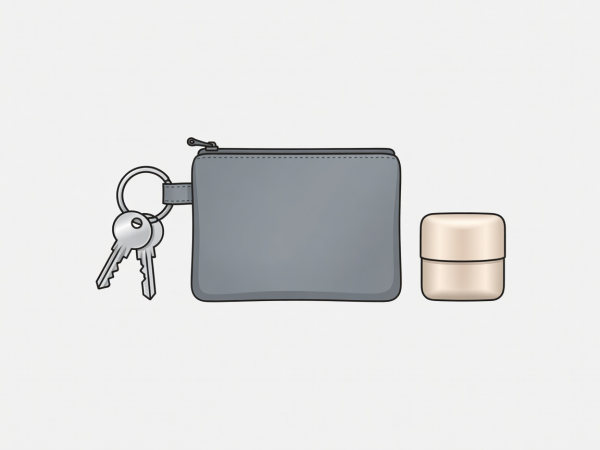
For a wallet, pouch, case or small bag, inspect the dimensions against the items you actually carry. Check the opening, closure, compartments and whether the product stays usable when full. A compact accessory can be elegant yet frustrating if it forces you to remove everything to reach one frequently used item. If the description gives only external measurements, look for interior dimensions or ask the seller.
Material choices should be specific enough to inform care. Leather, coated fabrics, woven textiles and synthetic materials vary widely in finish, resistance and maintenance. Read the cleaning guidance and consider how the surface will respond to rain, repeated handling or storage. For metal hardware, look for clear details about the finish and any care limitations. No single material is best for everyone: choose for your habits and tolerance for upkeep.
Comfort should be tested in context when possible. A strap’s width and adjustability, the weight of an item, the smoothness of an edge and the accessibility of a clasp all affect real use. For objects that touch skin, consider the feel of seams, lining and closure components. Returns and hygiene policies differ between sellers, so verify them before ordering rather than assuming an item can be tried and returned.
Small comforts and care rituals
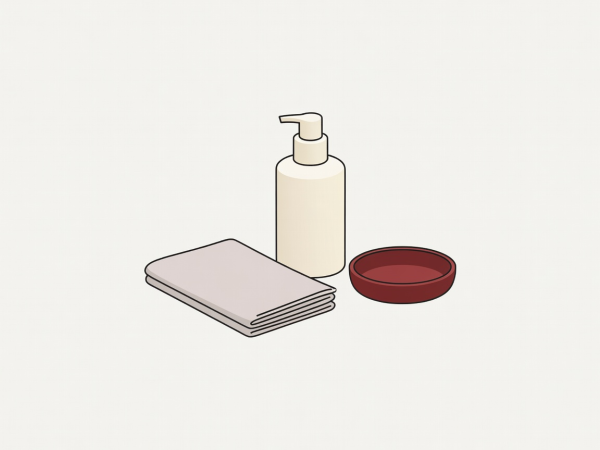
Items used for personal care can bring a sense of refinement through thoughtful form and easy handling. Look for a stable base, a dispenser that can be operated comfortably, a lid that closes securely and a container suited to the place where it will live. If you are considering a refillable format, check what refill is compatible and whether the opening can be cleaned. The convenience of the system matters as much as its appearance.
For textiles used close to the body, softness is personal and varies with weave, fiber, finish and washing. Read the composition and instructions; do not rely on a single vague adjective. If you are sensitive to particular materials or fragrances, examine the ingredients or fabric details and consult an appropriate professional when needed. This site does not provide medical or dermatological advice.
A personal ritual should stay easy enough to repeat. A beautiful object that needs delicate, frequent maintenance may not suit a rushed morning. Compare the care routine with your real schedule, not an ideal version of it. Consider storage too: an item kept within reach is more likely to be used, while one that needs a special display or elaborate arrangement can become another task.
Travel-friendly refinement
When choosing travel accessories, practical details quickly become more important than polish alone. Check measurements against the bag or luggage you use, review weight, and confirm whether compartments suit your essentials. A case that protects an object should still allow access without a struggle. For liquids or small care items, look for secure closures and material that can be wiped clean, and review any relevant carrier rules before travel.
Packability and durability should be considered together. A soft item may compress easily but offer less protection; a rigid case may protect contents but take up valuable room. Look at stitching, stress points, zippers and replaceable components where those are disclosed. If the item will be used only occasionally, compare the storage space it consumes with the convenience it provides.
Value in the details
Compare similar products on a consistent basis: function, dimensions, material, finish, expected care, warranty information and the seller’s return terms. Price alone is not a quality measure, and attractive branding is not a material specification. Look for close-up product views and plain descriptions of construction. If a key detail is unclear, ask before purchase.
Good personal objects are often quietly dependable. They are comfortable in the hand, easy to find, appropriate to the routine and satisfying without being precious. If a candidate seems promising, pause and imagine using it through an ordinary week. That mental test can be more useful than asking whether it looks impressive in a photograph.
For giftable versions of these small comforts, visit Thoughtful finds with a premium feel. To compare products step by step, use the buying guide.